Identification For Goats
Registration exists to identify individual goats — and that identification has to hold up over the life of the animal, whether it changes hands, gets lost, or needs to cross state lines. Every goat presented for registration must carry one of three approved, permanent, USDA-compliant ID methods.
Note: USDA requirements exist separately from SCIGBA's own rules, and both apply.
1. Whose Job Is It?
Goats acquired from another breeder: The goat should already have identification in place. If it doesn't appear to have an ID, contact the breeder to ask.
Goats born on your farm: It's your responsibility to assign identification. You choose which of the three approved methods to use.
2. The Three Approved ID Methods
Per USDA rules, permanent identification must be one of the following:
Option 1: Official Scrapie Ear Tag
Markings required: One official plastic or metal USDA Scrapie tag applied to the ear.
Tattoo required? No.
Travel paperwork: A Certificate of Veterinary Inspection (CVI / health certificate) from an accredited vet. Nothing further.
Option 2: Microchip (Electronic ID / EID)
Markings required: An implanted 15-digit USDA-compliant (840) microchip, plus a permanent tattoo — "E" for an ear-based chip or "ET" for a tail-based one, typically placed in the left ear — flagging the chip's location at a glance.
Travel paperwork: CVI listing the full 15-digit chip number.
Also required for travel: The owner or transporter must provide a compatible microchip reader to the inspector on request.
Option 3: Standard Ear Tattoo
Markings required: Legible SCIGBA breed registration tattoo, permanently applied to the ears or tail web. (see Section 4 below for tattoo requirements)
Travel paperwork:
CVI listing the exact registry tattoo letters and numbers, and
A physical copy of the goat's Official SCIGBA Registration Certificate, which must travel with the animal.
Fading warning: Ear tattoos on SCI goats tend to fade quickly and can be hard to read on dark-skinned ears. Keep this in mind when choosing an ID method for a goat you expect to transport later in life.
3. Getting Set Up
What is a Premise ID?
A Premise ID (PIN) is a unique code permanently tied to the physical location where your goats are kept — not to you personally or to any one animal. It's how USDA/state animal health officials can trace an animal back to the farm it came from in the event of a disease outbreak. You only need to get one PIN, ever, per property; it doesn't expire or need renewal. You need a Premise ID before you can order official Scrapie ear tags or 840 microchips.
What is a Flock ID?
A Flock ID (also called a Flock ID Number, or FIN) identifies your group of animals as a unit, rather than the location — so, unlike a Premise ID, it travels with your herd/flock even if animals move between premises. You only need a Flock ID if you're using microchips; it isn't required for ear tags.
Step 1: Get your Premise ID (and Flock ID, if microchipping)
Call 1-866-USDA-Tag (866-873-2824). This connects you to USDA/APHIS or your state's animal health office, who will issue the number(s) — there's no cost. Have your farm's physical address ready. If you're only using ear tags, you just need the Premise ID; if you're setting up for microchips, ask them to also issue a Flock ID.
Step 2: Order your ID devices
Ear tags: Order from your supplier of choice — you'll need your Premise ID on hand to complete the order.
Microchips: SCIGBA has a discounted account with MicroChip ID Systems (mini chips — smaller size, smaller needle — plus readers).
Call 800-434-2843, press #2 for sales.
Tell them you're with SCIGBA and ask to set up your own login under the account.
Provide your SCIGBA Member # and Herd Name. (For USDA-approved 840 chips specifically, also provide your Premise ID# and Flock ID#.)
Pricing: $5/chip, $50 for the Pocket Hero reader (normally $79).
Once set up, order chips at hub.microchipidsystems.com.
More info on USDA 840 microchips:microchipidsystems.com
4. Reading a SCIGBA Registry Tattoo
An SCIGBA-registered goat using this ID method gets two tattoos — one in each ear — that together make up its full ID. Read on their own, neither tattoo means much; read together, they tell you exactly which herd the goat came from and which specific animal it is. On registration paperwork and in conversation, breeders refer to them as the RE (right ear) and LE (left ear) tattoo.
RE (Right Ear) = Herd Tattoo — a unique 2–4 character code chosen when you become an SCIGBA member, approved by the Registry.
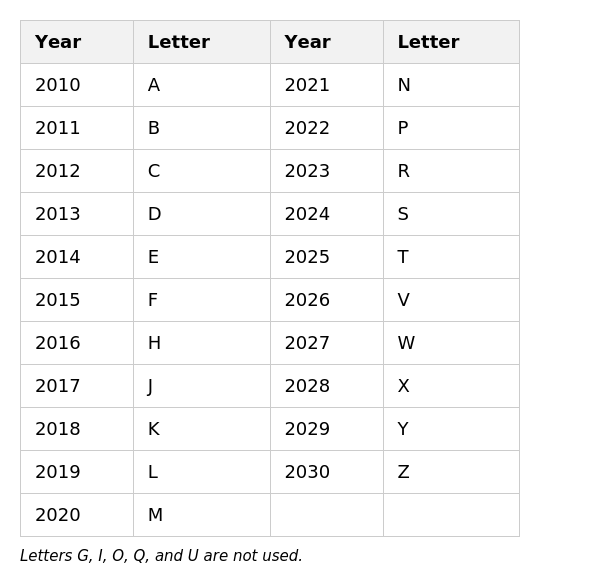
LE (Left Ear) = Individual ID — the year-of-birth letter + the number of that kid born on your farm that year. Example: the 3rd kid born in 2026 = "V3."
As of May 1, 2023, SCIGBA has USDA recognition as an approved association — meaning SCIGBA-registered tattoos qualify as an official form of ID.
5. Crossing State Lines: What You Need, By ID Type
In every case, your vet issues a Certificate of Veterinary Inspection (CVI / health certificate). What it must list — and what else travels with the goat — depends on which ID method the goat has.
If your goat has a Scrapie Ear Tag
CVI issued by an accredited vet. Nothing further needed.
If your goat has a Tattoo
The CVI must list the exact registry tattoo. In addition, bring one of the following:
A copy of the goat's Registration Certificate listing the tattoo number — plus, if the current owner isn't the one listed, a copy of the completed transfer-of-ownership application in the current owner's name (sale must have occurred within 60 days, or an approved extension), also listing the tattoo number.
(For animals under 60 days old) a copy of the completed registration application listing the tattoo number.
An interstate CVI that itself lists the flock of origin, flock of birth, the registry, and the registry tattoo.
If your goat has a Microchip
CVI listing the full 15-digit chip number.
a permanent tattoo — "E" for an ear-based chip or "ET" for a tail-based one, typically placed in the left ear — flagging the chip's location at a glance.
A compatible microchip reader must be made available to the inspector on request.
Heads up: When your vet calls the destination state to confirm requirements, the person on the phone will often mention only the "Scrapie tag" option by default. If you're using a microchip, ask your vet to specifically ask about microchips — they're USDA-recognized and accepted by any state that follows USDA regulations.
Questions?
Contact the SCIGBA Registry Committee or Registry Coordinator at registry@scigba.org.